
Nederlanders
De Bataven
A prince follows the Rhine to the sea, settles the island between the rivers, and his people swear to bow to no master.
- First recorded
- Tacitus, Germania and Histories, c. AD 98–110
- The island
- The Betuwe, between Rhine and Waal · 51.9° N 5.6° E
- The founder
- Bato, prince of the Chatti, in the Divisiekroniek, 1517
The legend in seven scenes
Choose a scene to start the film there“From this day, we are the Batavians.”
Long ago, in the dark forests of the Chatti, a king quarrelled with his son. The young prince, Bato, gathered those who would follow him and left his father's hall for good. “To the west,” he said. “We will find a land of our own.”
They loaded their cattle and goods onto boats and rafts and let the Rhine carry them down through the hills, day after day, until the mountains fell away and the river spread out into a wide, flat land of reeds, willows and water under an enormous sky.
Where the river parts in two, the prince stepped ashore on a low island and drove his spear into the earth. “Here, between the rivers, is our land. From this day, we are the Batavians.”
The water was never far away. So they carried earth and sods, basket by basket, and raised mounds high enough to stand above the floods, with their longhouses and cattle safe on top.
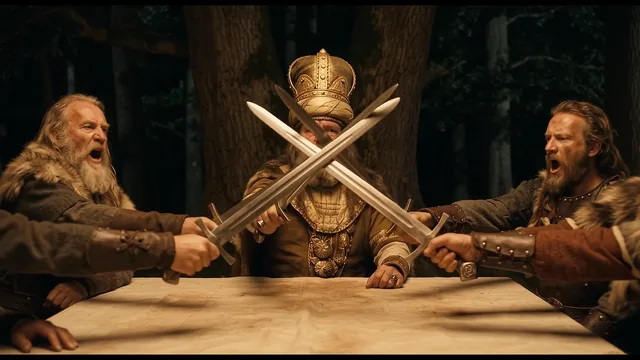
They were proud and free. When Rome demanded too much of them, their chieftain Claudius Civilis gathered his people at night in a sacred grove, and they crossed their swords and swore that the Batavians bow to no master. Their horsemen, it was said, could swim their horses across the widest rivers in full armour.
The land and its people
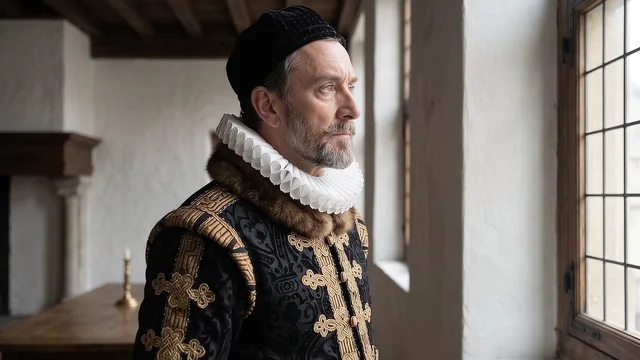 William of OrangeLeader of the Dutch Revolt and the “Wilhelmus” of the anthem, 1533–1584.
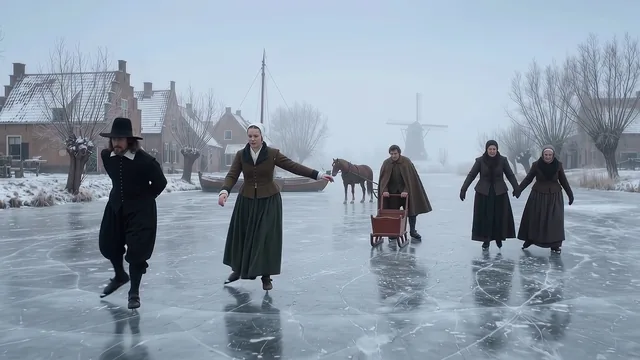 On the iceWinter on the frozen rivers, as Hendrick Avercamp painted it around 1608.
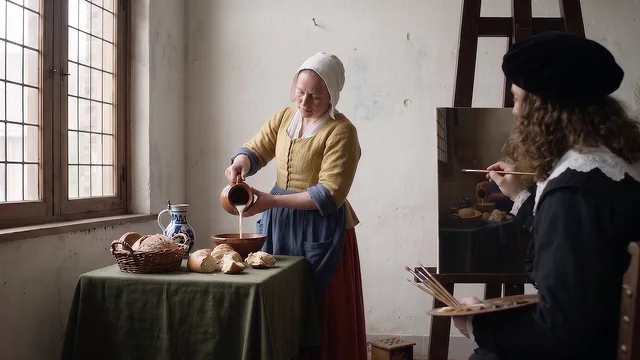 Vermeer and the MilkmaidDelft light and quiet work, painted around 1658.
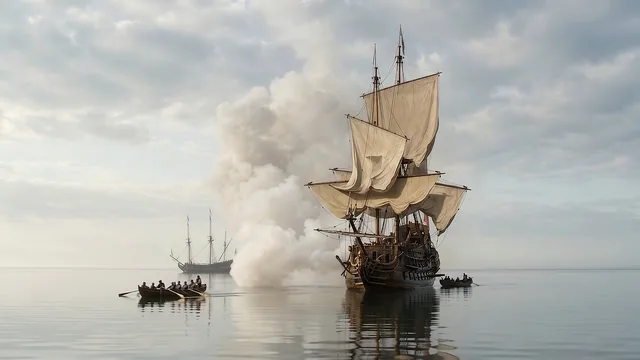 The Cannon ShotA Dutch warship on a calm sea, after Willem van de Velde, c. 1680.
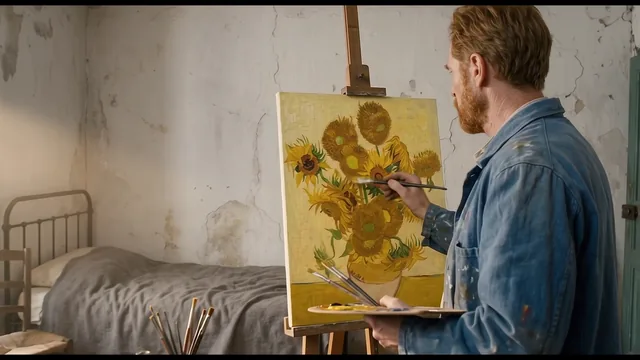 Van Gogh's SunflowersPainted in a rented room in Arles, 1888.
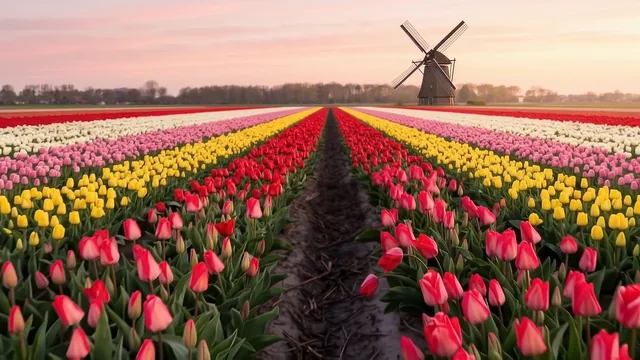 Tulip fieldsThe flower that set off the first great speculative craze, in 1637.
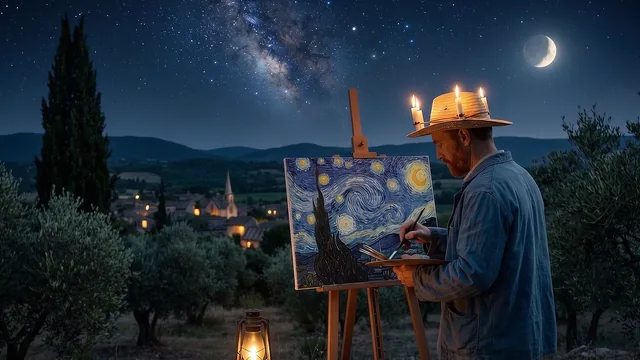 The Starry NightVan Gogh's swirling sky of 1889.
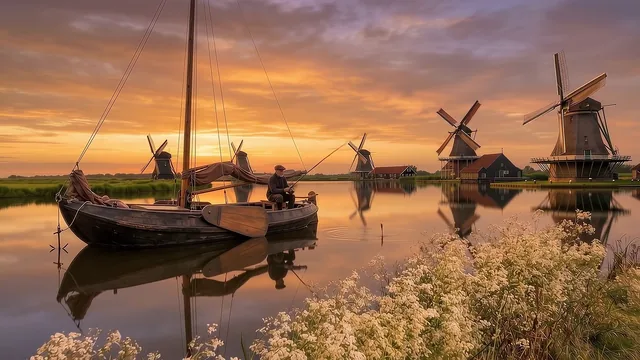 Zaanse SchansWorking windmills along the river Zaan, the industry of the Golden Age.
Neighbours in Tacitus
The same book by Tacitus records the German origin myth of Tuisto and his son Mannus, and next door, in Antwerp, people tell of Brabo, who threw the hand of a cruel giant into the river Scheldt.